
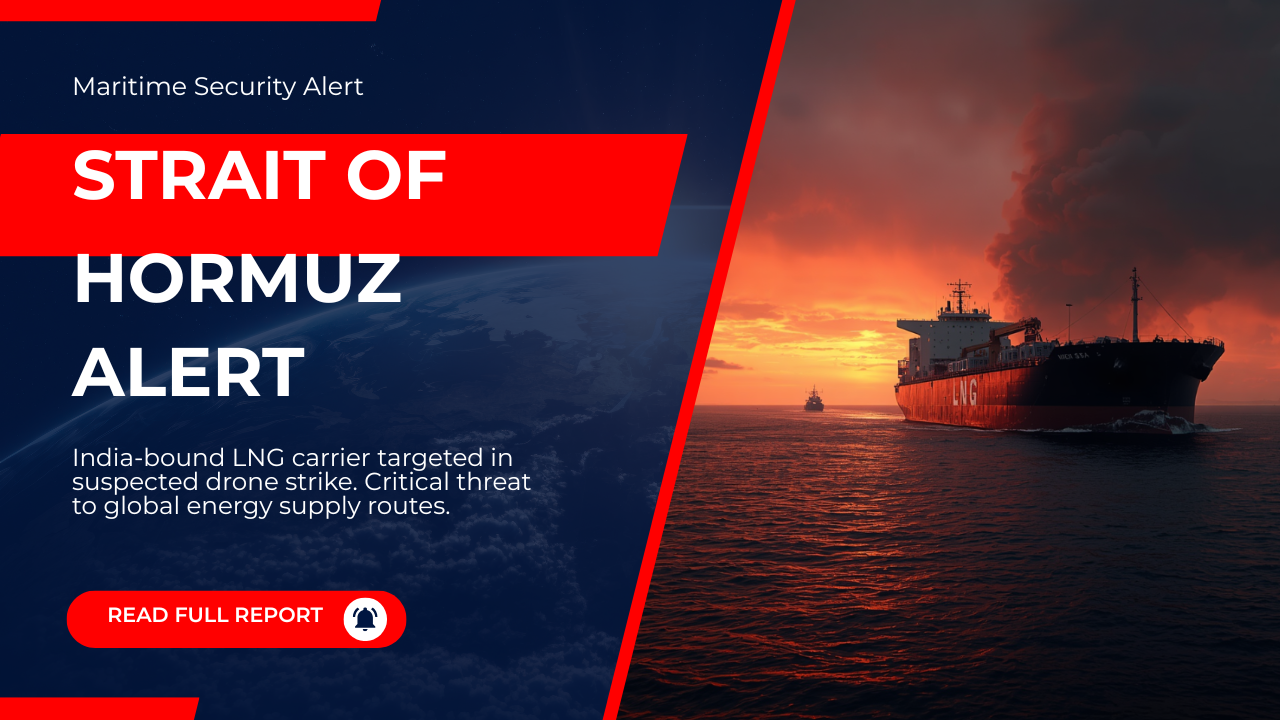
Strait of Hormuz Alert: India-Bound LNG Carrier Targeted in Suspected Drone Strike
July 7, 2026
In a chilling development that has sent shockwaves through global energy markets, a Qatari liquefied natural gas (LNG) carrier, LNGC Al-Rekayyat, was struck by a suspected drone attack while transiting the Gulf of Oman near the Strait of Hormuz on Tuesday. The vessel, which was en route from Ras Laffan, Qatar, to Dahej, India, reported an engine room fire following the strike, escalating tensions in one of the world’s most critical maritime chokepoints.
The Incident: What We Know So Far
The attack occurred early Tuesday morning as the vessel navigated the narrow passage connecting the Gulf to the Arabian Sea. According to reports and distress signals intercepted by nearby merchant vessels, the Al-Rekayyat was hit on its port side. The impact triggered a fire in the engine room, resulting in thick plumes of smoke.
Maritime security sources have confirmed that all 29 crew members on board—including four Indian nationals—are safe and were mustered to the starboard side. Despite the structural damage and the intense blaze, there have been no reported casualties or environmental oil spills, which is particularly fortunate given the highly volatile nature of the LNG cargo.
Geopolitical Aftermath: Qatar vs. Iran
Qatar’s Ministry of Foreign Affairs was quick to issue a stern condemnation, labeling the attack a “grave and explicit violation of international law.” Doha has publicly held the Islamic Republic of Iran accountable for the strike. This accusation follows claims by Iranian state media suggesting that vessels in the area were previously warned to utilize an Iranian-mandated maritime channel near Lark Island, a move that many international observers view as an attempt to coerce shipping traffic and assert regional dominance.
Global Trade Impact: A Chokepoint Under Siege
The Strait of Hormuz is not merely a geographic passage; it is the “jugular vein” of the global energy economy. With approximately 25% of the world’s seaborne oil and significant volumes of LNG passing through this narrow 21-nautical-mile corridor daily, any disruption carries immediate consequences.
-
Surging Insurance Premiums: Following the incident, war-risk insurance premiums for vessels transiting the Middle East are expected to climb sharply, adding to the cost of every barrel of oil and unit of gas delivered to Asia and Europe.
-
Energy Price Volatility: Brent crude prices have already shown signs of upward pressure, crossing the $90 per barrel mark in early trading. For energy-importing nations like India, this spells potential inflation risks for fertilizer, transport, and household fuel costs.
-
Supply Chain Disruption: As shipping companies reconsider their routes or demand naval escorts, transit times will increase, leading to a ripple effect across global supply chains already strained by ongoing regional conflicts.
The “New Normal” in Maritime Security
This attack is part of a broader pattern of maritime insecurity. As regional military escalations continue to bleed into commercial lanes, the international community is debating the adequacy of existing protections. The incident underscores a shift where commercial vessels are increasingly being used as “soft targets” in geopolitical chess matches.
Frequently Asked Questions (FAQs)
Q1: How many Indian crew members were on the vessel, and are they safe?
A: Yes, all four Indian crew members aboard the LNGC Al-Rekayyat are confirmed to be safe. There were 29 crew members in total, and all have been accounted for following the evacuation to a safe part of the ship.
Q2: Why is the Strait of Hormuz so significant for global trade?
A: It is the world’s most critical maritime chokepoint, facilitating the passage of about 25% of global seaborne oil trade and massive quantities of LNG. Any closure or threat here directly impacts global energy prices and supply security.
Q3: Who has been blamed for the attack?
A: Qatar’s Foreign Ministry has officially condemned the attack and held the Islamic Republic of Iran legally responsible, citing it as a violation of international maritime law.
Q4: Will this attack lead to higher fuel prices in India?
A: There is a strong possibility of a short-term rise in energy costs. Higher shipping insurance premiums, combined with potential delays in gas shipments, typically translate into increased landed costs for energy commodities, which can impact local fuel and electricity prices.
Q5: What measures are being taken to protect other ships?
A: International maritime bodies and naval coalitions are currently on high alert. The incident has renewed calls for increased naval patrols and a re-evaluation of security protocols for commercial vessels transiting the Gulf of Oman.
Conclusion: A Fragile Future
The attack on LNGC Al-Rekayyat is a stark reminder of how fragile the world’s energy lifeline has become. As diplomatic tensions simmer, the maritime industry and global powers must navigate a complex path: balancing the need for commercial freedom of navigation with the realities of an increasingly hostile maritime environment. For India, which relies heavily on energy imports from the Gulf, this incident highlights the urgent need for long-term energy diversification and robust maritime security cooperation.
Disclaimer: This report is based on available maritime security data and official statements as of July 7, 2026. The situation is evolving; updates should be verified through official government channels and maritime authorities